A smaller day can still be a good day
Japan Trip Plan B: Rain, Low Energy or a Late Start
Keep one good part of the day and drop the extra journey. A practical reset for Fukuoka, Osaka and Tokyo when weather, energy or timing changes.
TripCompass AI · Editorial review
Original guide: https://tripcompass.ai/itinerary/japan-plan-b/
The useful bits
- Keep one thing you still want, not the whole original route
- Remove a journey before choosing a replacement stop
- Leave one short note for the next time you open your trip
The plan changed. The day is not wasted.
Rain, a slow breakfast or a group that wants to rest can make yesterday’s plan a poor fit. You do not need a new list of ten attractions. Start with one thing you still look forward to, then make the day smaller around it.
This is for short Japan trips from Korea, especially when traveling together at different paces. It is an editorial decision aid, not a live weather service, a firsthand review or a confirmed route. Reopen it before departure and when conditions change. For severe weather or disrupted transport, follow current official notices and provider instructions, not this leisure-planning guide.
A quick reset before choosing somewhere else
- Check fixed commitments: accommodation arrangements, reservation conditions and the return-airport plan. A paid ticket is a reason to check its terms, not proof you should force the outing.
- Ask each traveler for one priority: a meal together, one shop or time resting. Do not turn everyone’s answer into another compulsory stop.
- Remove one journey: drop the farthest optional district or day trip before searching for a replacement.
- Choose a stopping point: agree where to reassess and when optional sightseeing must end, based on your confirmed commitments.
- Rain: keep one main interest, drop extra outdoor walks, and check warnings and access before leaving.
- Low energy: keep food and rest, drop the second district, and agree on the return plan together.
- Late start: keep the main purpose, drop the bonus stop, and recheck booking terms and your end time.
- A long queue or no table: decide what makes waiting worthwhile before trying another neighborhood.
- Different interests: keep one shared part of the day without combining everyone’s entire wish list.
Rain: change the route, not just the destination
An indoor destination does not make its approach sheltered or suitable. Check walks, station exits and outdoor waiting. A distant museum plus two cafes can still be a tiring transfer day.
Choose one manageable area based on where you are staying. Keep a nearby meal as an option, not a guaranteed open table. If the main venue is unavailable, ask whether a short nearby outing is worthwhile; do not automatically cross the city to rescue the plan.
Low energy: leave something for next time
Ask whether the group wants a shorter outing or no outing. Resting at the accommodation is a valid plan. One person wanting to continue does not mean everyone must follow; agree on arrangements together rather than assuming a split group works for you.
For example, replace “two neighborhoods, shopping and dinner” with “one shop, a meal if convenient, then back.” This is a planning example, not a walking-difficulty or accessibility assessment. The parents-focused Fukuoka guide offers a rest-first structure; verify your own route and needs.
Late start: reduce the plan instead of speeding it up
A full-day route does not become a half-day route by walking faster. Keep its main interest and remove the rest. Agree on a limit for optional waiting before joining a queue, and be willing to leave.
On the last day, bag collection and airport travel take precedence. Reopen the arrival and departure day guide and work backward using your airline’s current guidance. This page does not calculate a flight-safe departure time or guarantee a connection.
A long queue or no table: keep the meal, not necessarily the venue
First ask what you wanted from the stop: that particular dish, time sitting together, or a specific shop you have looked forward to. Those are different priorities. A nearby meal may serve the second one; it is not a substitute everyone must accept for the first.
- Ask before joining. Check whether the venue is accepting your group, whether there is a queue or booking system, and what staff can tell you about the wait. An estimate is not a promised seating time.
- Choose a reconsideration point together. Use your next fixed commitment, hunger and energy, rather than a universal “worth waiting” number. Anyone can ask to reassess sooner.
- Keep one fallback in the same area. Check its current menu, price, access and ability to accommodate your group before moving. Do not assume nearby means open, suitable or available. Confirm any essential dietary requirements directly with the venue; this guide does not assess food suitability.
- Drop an optional stop if you stay. Do not fit a longer meal into an unchanged afternoon by rushing the rest of the group. If you leave, check any existing reservation’s terms rather than assuming it is cancelled.
For Fukuoka, keep the area you already chose instead of switching between Hakata and Tenjin only to chase another queue. For Osaka, reassess the optional shopping stop, not the whole city’s restaurant list. For Tokyo, let a bookshop be the main visit and a cafe remain optional. These are ways to shrink the existing courses, not verified dining recommendations.
Note to adapt: “Keep: lunch together. Reconsider: before the next fixed booking. Drop: the second cafe.” Use the city links below to save your own short reminder; reading this example does not save it.
Different interests: one shared moment, not three full itineraries
Try finishing two sentences each: “The one thing I would miss is…” and “I am happy to skip…”. Choose one shared meal or visit, then keep a second activity optional. Equal numbers of stops do not necessarily make a fair day if one traveler bears all the transfers or waiting.
- Stay together: let today’s main interest come from one person and agree when to revisit the other preference. Do not promise an extra outing if the remaining trip cannot fit it.
- Separate briefly only by agreement: decide the meeting place, time, contact method and what to do if plans change. Consider the group’s support needs; do not assume splitting up suits children or anyone who needs assistance.
- Leave the choice open: if nobody likes the smaller plan, take a break and reconsider. A shopping companion does not have to become a shopping enthusiast.
Example: “One person wants kitchenware, another wants a relaxed meal” can become one browsing stop followed by a meal if conditions suit, with the second shopping district removed. It does not require adding a workshop or making a booking.
Note to adapt: “Together: one meal. Optional: one shop. Decide the rest after eating.” Keep only the next unresolved choice in your city note, not private details about other travelers.
Fukuoka: keep one area
In the Fukuoka weekend course, choose which you would miss more: park time or shopping time. If the day needs shortening, keep one rather than trying to recover both later.
- Rain: use the Hakata-or-Tenjin rainy-day plan to choose one area. Verify the actual route and current conditions.
- Low energy: take the rest-first structure from the parents course, not as a verified accessible route.
- Late start: reconsider the Dazaifu replacement day before leaving. A smaller city plan is an option, not a missed obligation.
Note to adapt: “Keep one area; leave the extra outing for next time; recheck tomorrow morning.” Return to my Fukuoka trip.
Osaka: keep the city day or one day trip
The Osaka four-day course offers a choice, not a requirement to visit every nearby city. Staying in Osaka and keeping one interest is also a plan.
- Rain: check the actual approach before assuming a shopping day is indoors. The Doguyasuji guide is a browsing idea, not an all-weather guarantee or confirmed workshop.
- Low energy: compare another Osaka day with one Kyoto area. Drop intercity travel if it no longer fits the group.
- Late start: reassess the Nara day as a whole. Do not combine it with Kyoto to catch up.
Note to adapt: “One main interest today; no second city; review the remaining day together.” Return to my Osaka trip.
Tokyo: choose one neighborhood interest
When the Tokyo four-day course feels too full, remove a cross-city journey before choosing a new stop. One bookshop or exhibition can be the main event; the cafe afterward is optional.
- Rain: check the approach and venue conditions for one indoor interest. Neither Jimbocho books and cafes nor Kiyosumi-Shirakawa is a fully sheltered route.
- Low energy: keep one interest in the part of the city you already chose, or rest instead. Do not add a new neighborhood just to find a break.
- Late start: pick the bookshop idea or the garden/exhibition idea, not both. Check current access and hours before committing to the journey.
Note to adapt: “One neighborhood, one main stop; skip the next district if we want to rest.” Return to my Tokyo trip.
What a change could cost
Before buying a replacement activity, compare extra transport, a second ticket and the original cancellation terms. Do not assume a weather change creates a refund right. A smaller plan can avoid new purchases, but does not guarantee savings or recover money already spent.
Use the Japan budget guide or decision board with amounts you checked yourself. This guide supplies no current prices, availability or partner offers.
Tonight: agree on one good thing for tomorrow
Before everyone starts collecting more places, ask: what felt worthwhile today, and what took more energy than expected? Keep the answer small. A good meal together might matter more than the extra district you never reached.
- Keep one shared priority. Let each person name one preference, then agree on the main one. A quiet morning counts; do not turn every answer into a stop.
- Name the first thing to drop. Choose the optional journey or queue you would remove if tomorrow feels too full. Do not buy a replacement just to fill the gap.
- Separate fixed commitments from wishes. Check actual reservation terms and the return plan yourself. A note here does not modify a booking or mark preparation as complete.
Try a short note: “Keep: one bookshop. Drop: the second district. Recheck: after breakfast.” For Fukuoka, that main interest might be one city area; for Osaka, choose the city day or one outing; for Tokyo, keep one neighborhood. Use the city sections above to revisit the tradeoff.
If you disagree, keep the unresolved choice in the note rather than forcing a full itinerary tonight. Tomorrow is not a debt owed to today’s unfinished list.
Tomorrow morning: keep, shorten or rest
Read yesterday’s note before opening a new list of recommendations. Check how the group feels, current official weather/transport notices and the conditions for any fixed booking. Yesterday’s plan is a starting point, not confirmation that it still works.
- Keep it if the priority still matters and the arrangements you checked fit.
- Shorten it by removing the optional journey or waiting you named last night. Recheck what that changes for the return trip.
- Rest instead if no smaller outing suits the group. Follow official/provider instructions when conditions are disrupted; this is not an emergency guide.
Example: “Books, then maybe a cafe” can become “one shop, then back,” not “a different neighborhood to make up for the cafe.” After deciding, replace the note with the next unresolved question. There is no need to keep a diary of every change.
Leave a useful starting point for your next visit
Saved several ideas? Choose one for this day
A saved guide is a possibility, not a commitment. When you return to a long list, compare just two candidates for the same part of the day. Keep the others saved for later; you do not need to delete an idea to leave it out of this trip.
- Read your own note first. Has the reason you saved each idea changed? Choose the experience you still want, not whichever guide you opened most recently.
- Compare the whole outing. Consider the journey from your accommodation, time together, rest and the return trip, not just the attraction. Separate fixed bookings from optional ideas and recheck their terms.
- Pick one, and name what it replaces. Keep a second candidate as an alternative, not an extra stop. If neither fits, leave the choice open rather than booking something to finish the list.
Use the existing guides as pairs, not combined routes:
- Fukuoka: compare the Dazaifu outing with one city area. Which main interest matters more today? Reopen saved Fukuoka guides.
- Osaka: compare the Nara day with Doguyasuji browsing. Do you want an outing or to keep the day’s main interest in Osaka? Reopen saved Osaka guides.
- Tokyo: compare Jimbocho books with Kiyosumi-Shirakawa’s garden, art and coffee ideas. Choose one interest rather than joining the two courses. Reopen saved Tokyo guides.
Note to adapt: “First choice: __. Instead of: __. Still to check: __.” Check current access, hours and any booking conditions with the relevant providers. These pairs do not establish today’s feasibility. Reading or following these links does not change your saved guides or course choice; an edited city note still needs an explicit save.
Keep only the next unresolved choice
In My trips, leave a short note with one thing to keep, one thing to drop and when to reconsider. Use your own wording rather than copying the whole itinerary. Do not enter passport details, booking references or payment information.
Reading this page does not change your course, preparation checks or saved guides. Adjust them only if you decide to. Save this guide to find it in the saved guides for Fukuoka, Osaka and Tokyo in My trips. It is one shared bookmark: removing it removes it from all three city lists, with the existing Undo option in My trips.
Bookmarks and notes stay in this browser, not in an account or on other devices. Drafts are tab-local, and Save note keeps a note for later visits. Clearing site data removes these records. There is no automatic reminder or offline guide download.
Still choosing a city? The AI finder suggests starting options; it does not verify whether today’s route is workable.
Editorial scope
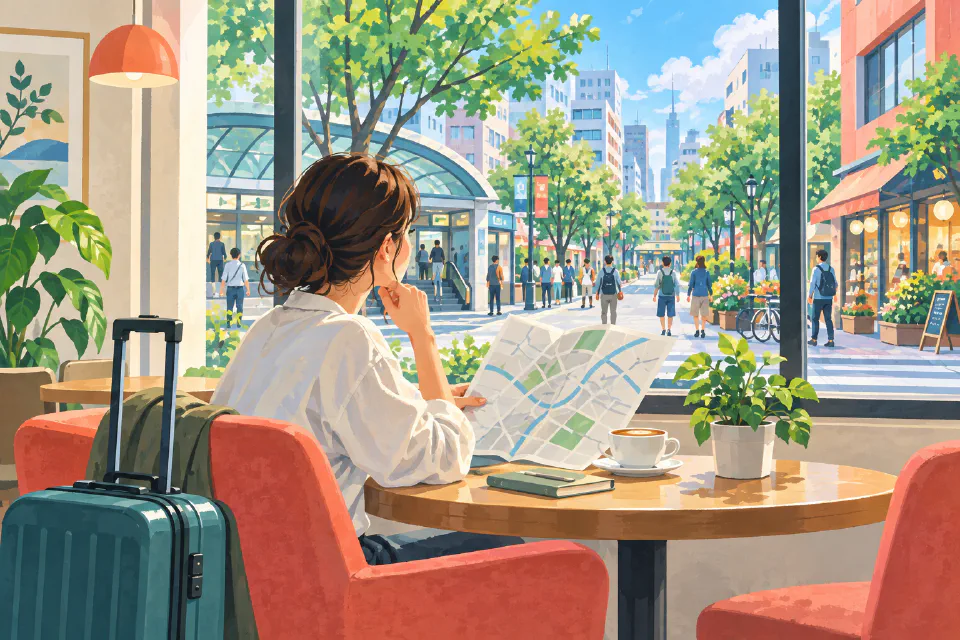
Reviewed on 23 October 2026 for clarity and links to our existing guides. These are editorial choices, not a new verification of venues, weather, transport, opening hours, prices or reservation terms. The cover reuses an AI-generated imagined planning scene, not a photograph of a real hotel or a route map.
Check current prices, opening hours, visa rules, availability and booking terms with the relevant official providers. This guide does not guarantee safety, entry, connections or bookings.